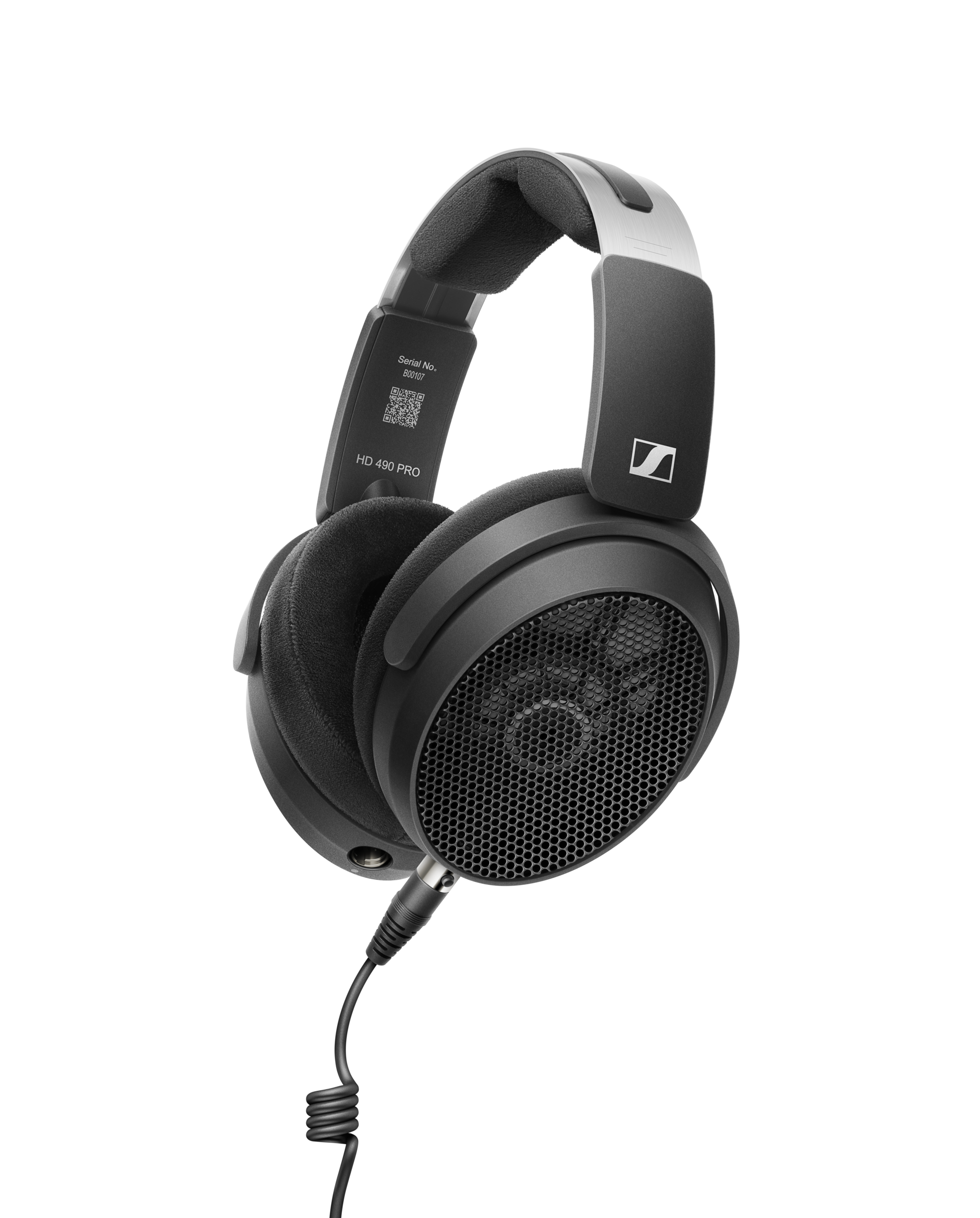

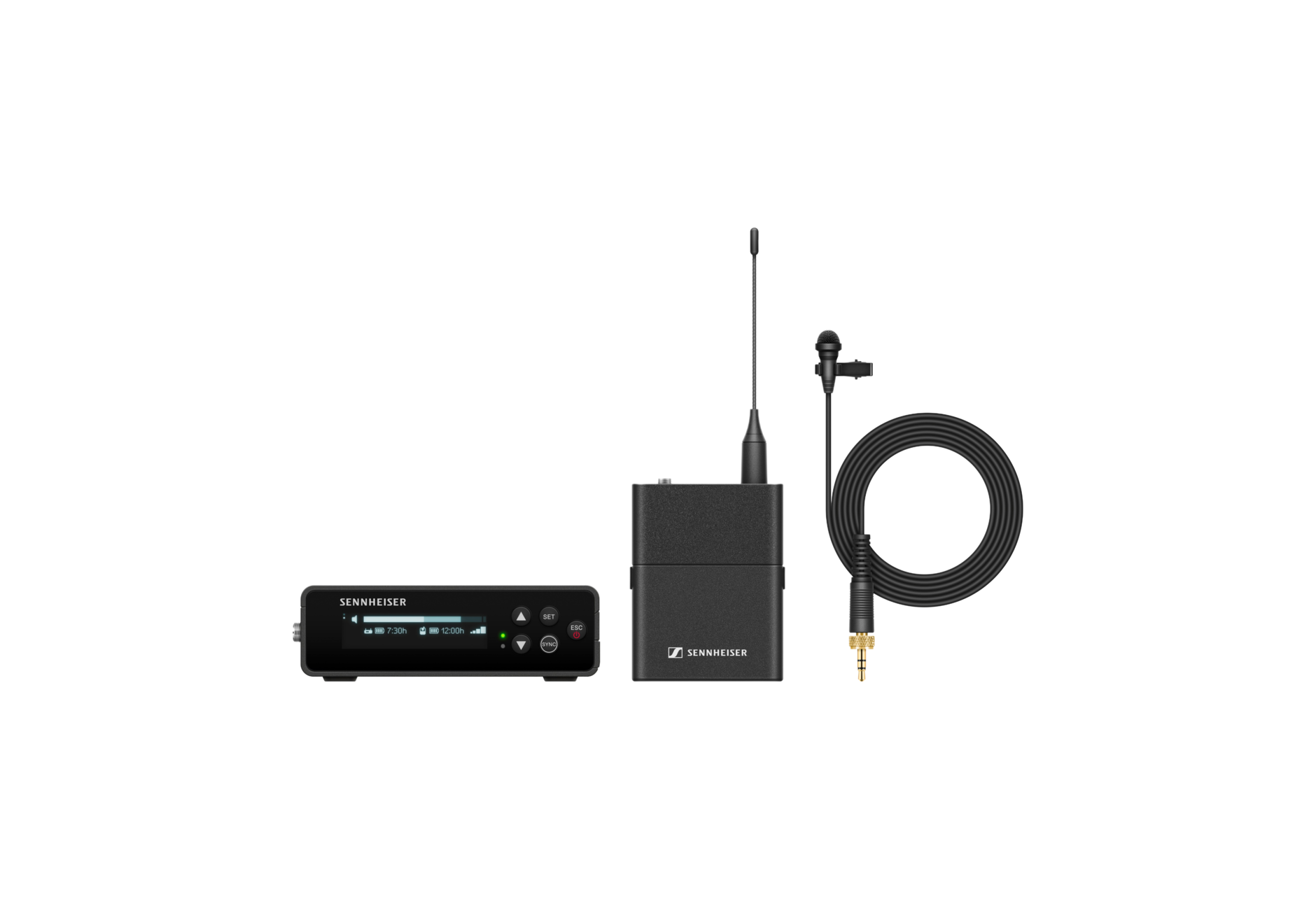


museum, exhibition, headphones, stethoset receiver
MSRP:$584.00
General Description
Six channel digital RF stethoset receiver. Offers automatic on/off, easy volume and channel selection. Includes an internal integrated rechargeable battery.
Features
- 6 channels in the license-free frequency range USA: 926-928 MHz
- Automatic on/off
- Large rotary volume control
- Backlit display shows:
- Selected channel
- Battery status
- Signal quality
- Volume
Delivery Includes
- HDE 2020-D-US (minimum order quantity 10 pcs.)
museum, exhibition, headphones, stethoset receiver
MSRP:$584.00
Technical Data
| Dimensions |
9.6 x 4.9 x 0.8 in. (245 x 125 x 20 mm) |
| Frequency response (headphones) |
100 - 7,000 Hz |
| Modulation |
2 FSK |
| Number of channels |
6 |
| Operating temperature |
0 - 50 °C |
| Operating time (Accupack) |
8 h. |
| Power supply |
830 mAh Lithium-Polymer |
| RF frequency range |
926 - 928 MHz |
| Sound pressure level (SPL) |
120 dB SPL |
| Total harmonic distortion (THD) |
< 1% |
| Weight incl. Accupack |
2.6 oz. (73 g) |
museum, exhibition, headphones, stethoset receiver
MSRP:$584.00
Recommended Accessories
| Part/Accessory |
Article No. |
| L 2021-40 |
502037 |
Rack-mountable charger for (40) HDE 2020-D-US or EK 2020-D-US receivers. Includes software for receiver configuration (such as channel settings). Interface for software control and networking.
|
museum, exhibition, headphones, stethoset receiver
MSRP:$584.00
Variants
MSRP:$584.00
Glossary
| Frequency response (headphones) |
| The frequency response of a pair of headphones is given within limits defined by the manufacturer. |
| Modulation |
| The process in which one wave is varied by some parameter of another wave, for example, an RF carrier frequency that is modulated by an audio signal. Types of modulation include amplitude modulation, frequency modulation, pulse code modulation and pulse width modulation. |
| Number of channels |
| Frequencies which are available to transmit a signal. |
| Operating temperature |
| Gives the range of temperatures at which a unit can be operated without damage. |
| Operating time (Accupack) |
| Indicates the operating time with a new, fully charged accupack. |
| Power supply |
| Description of the power source used for powering a unit, for example mains, battery, rechargeable accupack, etc. |
| RF frequency range |
| The range of frequencies to which a unit (e.g. a receiver) can be tuned. |
| Sound pressure level (SPL) |
| Due to the impractical numerical values, the sound pressure is usually given as the logarithmic value of the sound pressure level according to the equation: dB SPL = 20 x log (po / 0.00002 Pa). The abbreviation SPL (sound pressure level) is added in order to make a clear distinction from other uses of dB. The reference sound pressure, which is at the same time the threshold of hearing, is then 0 dB SPL. The threshold of pain is 140 dB SPL. A difference in the sound pressure level of 1 dB is just about perceptible, while a doubling of the sound pressure corresponds to 6 dB and a doubling of the volume corresponds to a rise of 10 dB.
|
| Total harmonic distortion (THD) |
| Total harmonic distortion is a measure of non-linear harmonic distortion and is given in %. Non-linear harmonic distortions are signals which were not present in the original before the signal was converted by the headphones. These unwanted signals are caused by the diaphragm, whose movements do not precisely move in time with the electric signals that cause it to move. Unfortunately, this is a feature of all electroacoustic transducers. Although it cannot be completely eliminated, suitable steps can be taken to minimise it. However, the user is not interested in why this distortion takes place but in how great the level of distortion must be for it to become perceptible. According to the findings of several research projects, a total harmonic distortion of 1% in the frequency range of 100 to 2000 Hz is imperceptible. Below 100 Hz, the perceptibility threshold lies at 10%. |