

Long Shotgun Microphone - Directional Microphone
$1,749.95
General Description
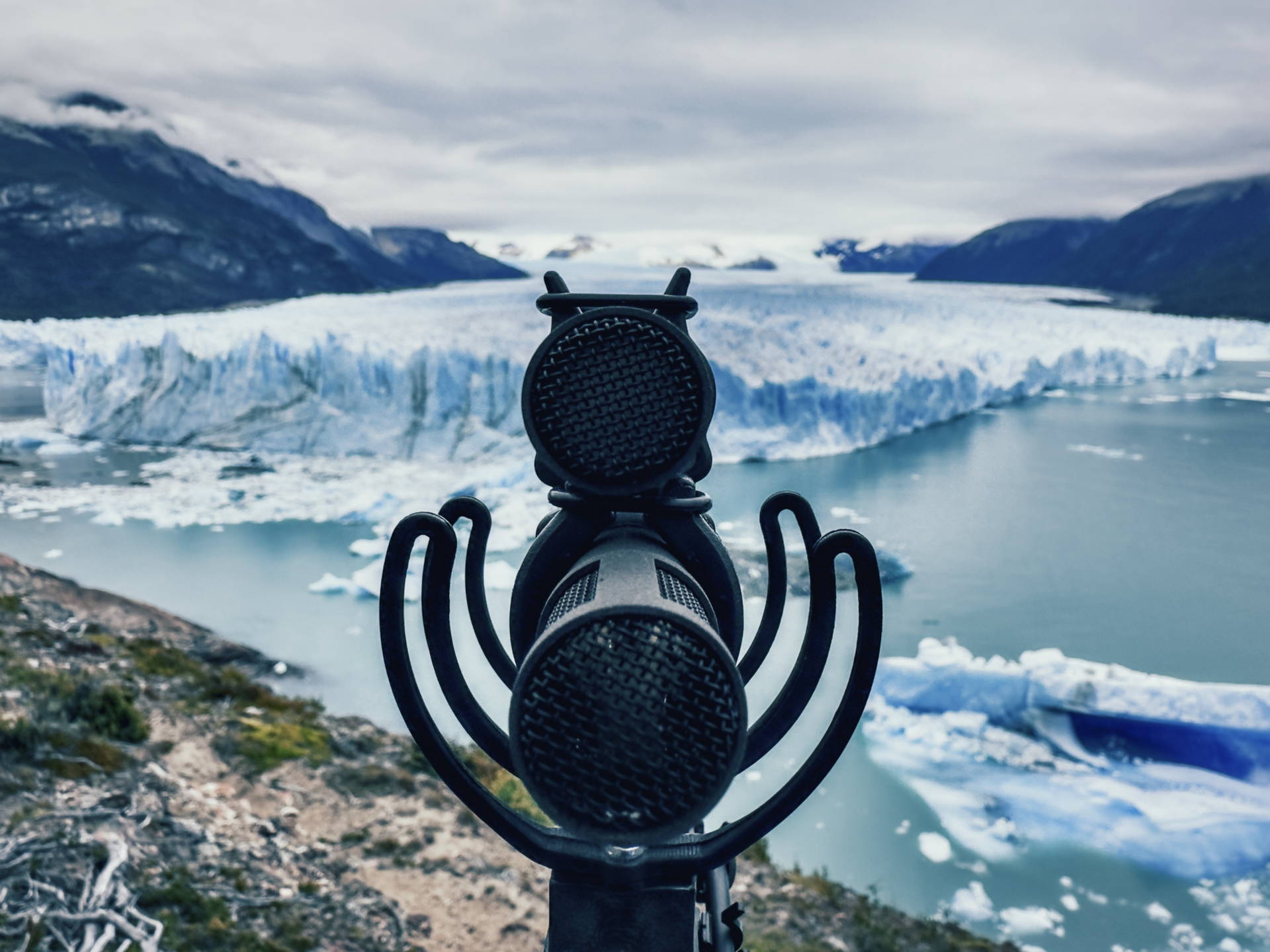
The MKH 70 is a lightweight long gun microphone. Its excellent directivity is particularly suited to applications undertaken in difficult conditions, such as high background noise and distance microphone positioning. Its frequency-independent directivity prevents sound colouration from off-axis sound sources.
Features
- Exceptionally low inherent self-noise
- Transformerless and fully floating balanced output
- Infra-sonic cut-off filter
- Symmetrical transducer technology ensures extremely low distortion
- Switchable pre-attenuation, switchable roll-off filter and switchable treble emphasis
- Rugged and weather-proof
- Black, anodised light metal body
Delivery Includes
Long Shotgun Microphone - Directional Microphone
$1,749.95
Technical Data
| Transducer principle |
RF condenser microphone |
| Pick-up pattern |
super-cardioid/lobar |
| Frequency response (microphone) |
50 - 20,000 Hz |
| Sensitivity in free field, no load (1kHz) |
50 (15) mV/Pa |
| Nominal impedance |
150Ω |
| Min. terminating impedance |
1,000Ω |
| Equivalent noise level |
5 (13) dB |
| Equivalent noise level weighted as per CCIR 468-3 |
16 (24) dB |
| Max. sound pressure level (passive) |
124 (132) dB at 1 kHz |
| Battery |
48 ±4 V Phantom |
| Current consumption |
2 mA |
| Dimensions |
d 1 x 16 in (25 x 410 mm) |
Polar diagram
Long Shotgun Microphone - Directional Microphone
$1,749.95
Recommended Accessories
| Part/Accessory |
Article No. |
| CASE LONG MKH |
055638 |
Foam-lined hardshell polymer case for MKH416, MKH418S, MKH60, MKH70
|
| CASE MKH 70 |
040491 |
Wood case for MKH70
|
| MZA 14-TU |
002959 |
Battery power supply, powers one 12 volt AB (T-powered) microphone. Battery life approximately 30 hours using a 9 volt alkaline battery. Battery test, attenuation (0, -10, -20 dB) and low frequency rolloff (20, 80, 140 Hz) controls (19.0 oz)
|
| MZH 70-1 |
003225 |
long hair windscreen for use with MZW70-1
|
| MZS 20-1 |
003609 |
combination shockmount pistol grip and stand, pole adapter for MKH and K6 series, required for blimp
|
| MZW 70-1 |
003608 |
long hair windscreen for use with MZW70-1
|
| MZW 71 |
003195 |
black foam windscreen for MKH70
|
Long Shotgun Microphone - Directional Microphone
$1,749.95
Variants
$1,749.95
Glossary
| Equivalent noise level |
| The output signal of every microphone always includes a low noise signal in addition to the useful signal. In order to illustrate the extent of the noise voltage, it is given as a fictitious sound pressure level. In an ideally noise-free microphone, a sound pressure level of this magnitude would result in an output voltage of the magnitude of the noise. Self-noise is measured and weighted either in accordance with CCIR 468-3 or – in order to assimilate the measured result with the listening impression of the human ear – in accordance with DIN/IEC 651 (so-called A-weighted). Studio condenser microphones generally have an equivalent noise level of between 20 and 30 dB (CCIR) or between 10 and 20 dB(A). |
| Equivalent noise level weighted as per CCIR 468-3 |
| The output signal of every microphone always includes a low noise signal in addition to the useful signal. In order to illustrate the extent of the noise voltage, it is given as a fictitious sound pressure level. In an ideally noise-free microphone, a sound pressure level of this magnitude would result in an output voltage of the magnitude of the noise. Self-noise is measured and weighted either in accordance with CCIR 468-3 or – in order to assimilate the measured result with the listening impression of the human ear – in accordance with DIN/IEC 651 (so-called A-weighted). Studio condenser microphones generally have an equivalent noise level of between 20 and 30 dB (CCIR) or between 10 and 20 dB(A). |
| Frequency response (microphone) |
| The frequency response of a microphone is given within the limits defined by the manufacturer. In studio condenser microphones it is generally within the range of between 20 Hz and 20 kHz. |
| Min. terminating impedance |
| Impedance at which the connected unit meets the specified technical data. If the unit is connected to a lower impedance, it will usually have a lower output voltage or a greater distortion. |
| Nominal impedance |
| See impedance. |
| Pick-up pattern |
| Also known as polar pattern, directivity. According to their acoustic design, microphones differ in their sensitivity towards sound from different directions. Pressure microphones have a sensitivity that is largely independent of direction (omni-directional pick-up pattern). Pressure gradient microphones have the pick-up patterns wide cardioid, cardioid, super-cardioid or figure-of-eight. Interference microphones can be used to achieve a further concentration of the pick-up pattern (lobar pick-up pattern). As a special case, dummy head microphones achieve the pick-up pattern of the human ear/head (dummy head stereo). |
| Sensitivity in free field, no load (1kHz) |
| Voltage measured at the unloaded output of a microphone which is exposed to a sound pressure of 1 Pa and a frequency of 1 kHz in an anechoic chamber. |
| Transducer principle |
| Two transducer principles have become established for the conversion of electric energy into mechanical energy: electrodynamic and electrostatic transducers, whereby the latter is only to be found in audiophile systems, due to their relatively high manufacturing costs. Electrodynamic transducers basically consist of a ring-shaped permanent magnet and an oscillation coil, which is fixed to the receiver diaphragm. When an audio-frequency alternating current is passed through the oscillation coil, it is caused to vibrate in accordance with the audio-frequency alternating current, thus causing the diaphragm to vibrate in the same way. |