

Camera Microphone - Camcorder Microphone
$199.95
General Description
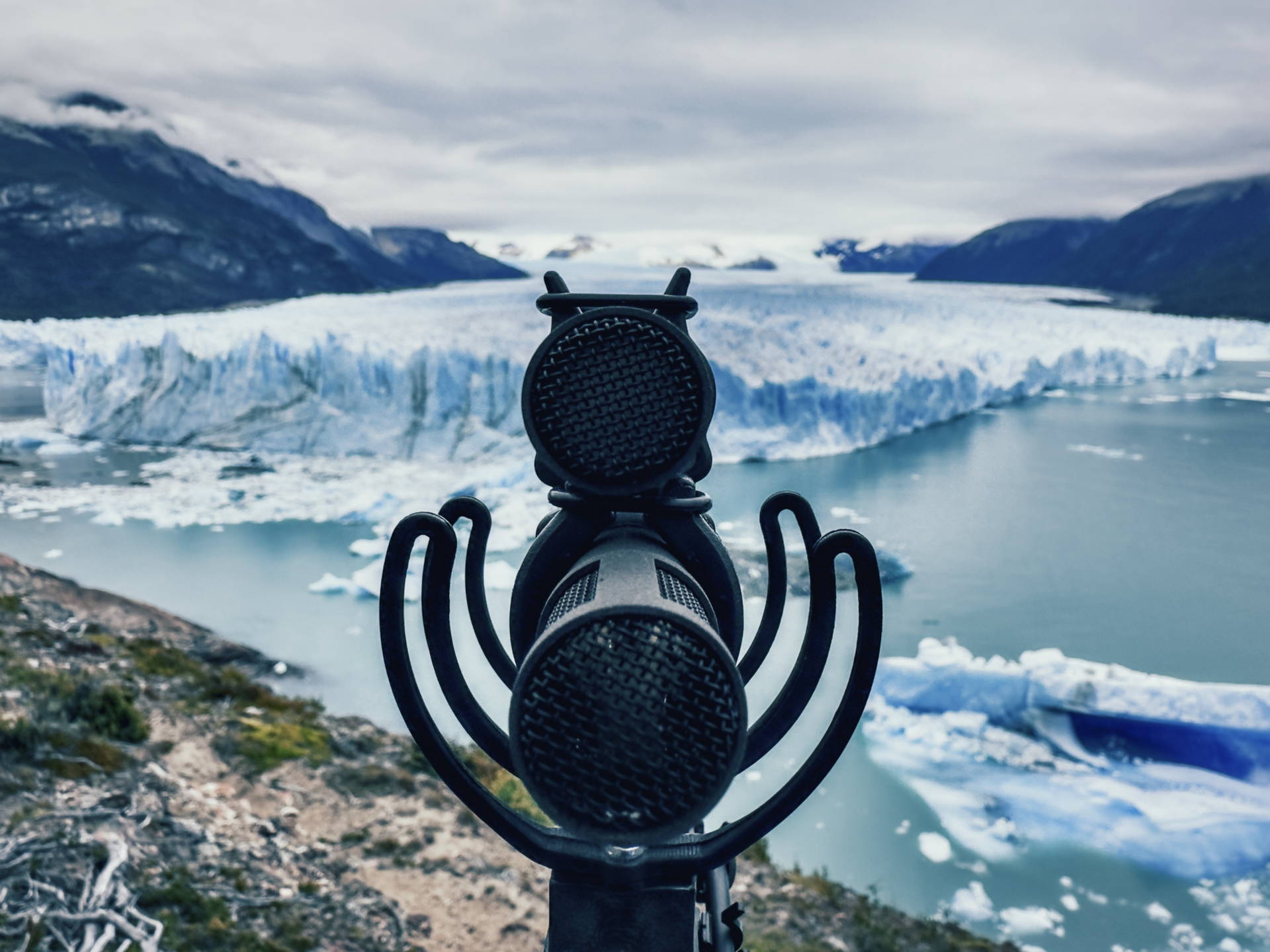
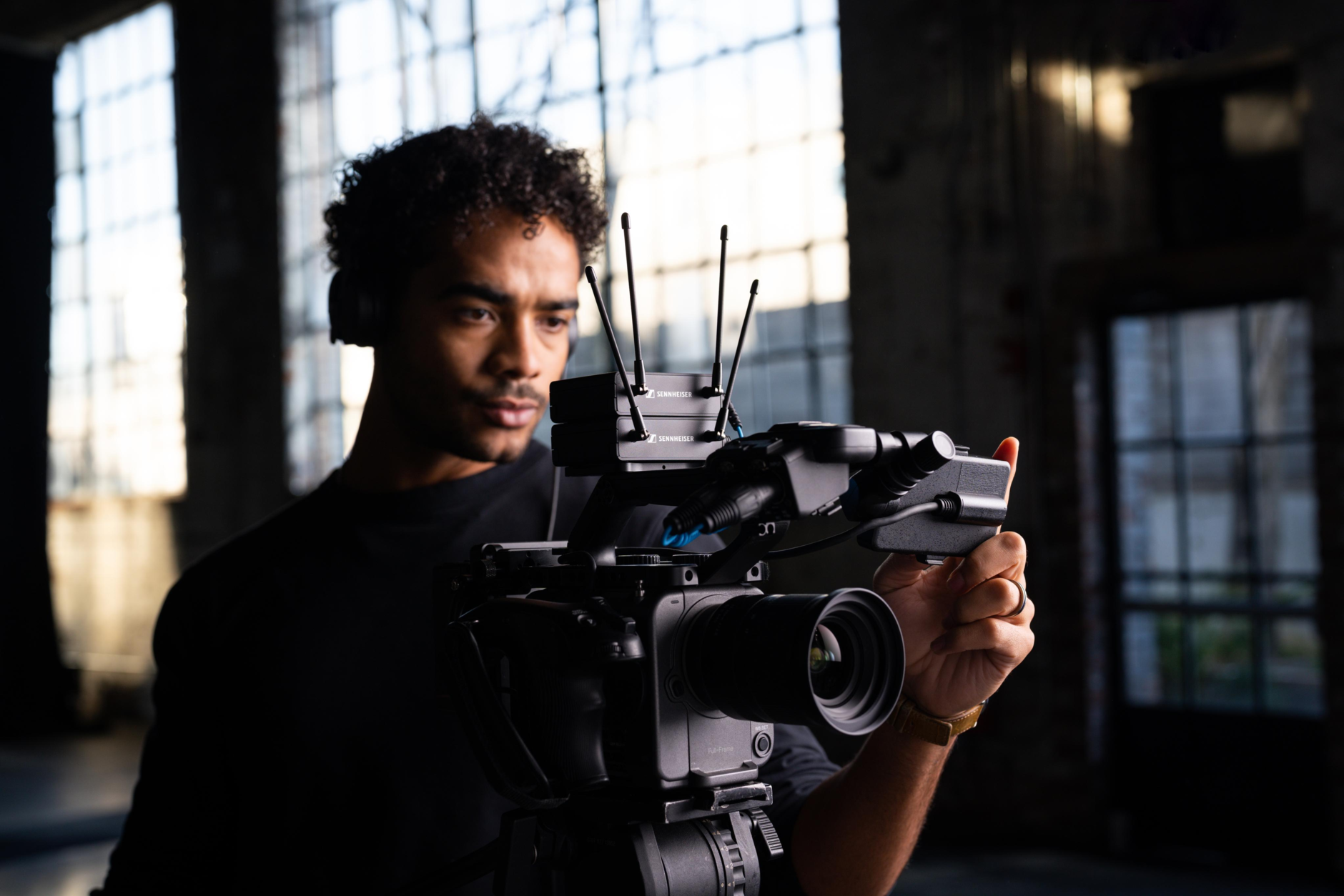
Rugged, compact and versatile for great video sound: The MKE 400 is a small shot gun microphone for cameras with a lighting shoe mount and external microphone input.
Features
- Rugged all-metal housing
- Maximum side noise rejection, optimised for video recordings
- Switchable sensitivity for long and short distances
- Switchable wind noise filter
- Approximately 300 hrs operating time (from a single AAA battery)
- Integral shock-mount for rejection of handling noise
- Foam windshield included
Delivery Includes
- Battery (size AAA)
- Foam windshield
- MKE 400 with coiled cable (3.5 mm stereo mini jack)
Camera Microphone - Camcorder Microphone
$199.95
Technical Data
| Cable length |
Approx. 7.9 in. (200 mm) |
| Dimensions |
5.1 x 0.83 x 2.4 in. (130 x 21 x 62 mm) |
| Equivalent noise level |
21 dB (A) ("vol -") 16 dB (A) ("vol +") |
| Frequency response |
40 Hz - 20 kHz |
| Max. sound pressure level (passive) |
126 dB ("vol -") 118 dB ("vol +") |
| Connector (microphones) |
3.5 mm stereo mini jack |
| Operating time |
Approx. 300 h. |
| Pick-up pattern |
Super-cardioid, lobar |
| Power supply |
1.5-V battery (size AAA) |
| Sensitivity as per 121 TR 9-5 |
8 mV/Pa ("vol -") 20 mV/Pa ("vol +") |
| Weight |
Approx. 2.1 oz. (60 g) |
Camera Microphone - Camcorder Microphone
$199.95
Recommended Accessories
| Part/Accessory |
Article No. |
| Windshield for MKE 400 |
528117 |
Windshield for MKE 400
|
Camera Microphone - Camcorder Microphone
$199.95
Variants
$199.95
Glossary
| Cable length |
| The cable length is usually measured between the anti-kink sleeves of the cable (cable length without connectors). |
| Equivalent noise level |
| The output signal of every microphone always includes a low noise signal in addition to the useful signal. In order to illustrate the extent of the noise voltage, it is given as a fictitious sound pressure level. In an ideally noise-free microphone, a sound pressure level of this magnitude would result in an output voltage of the magnitude of the noise. Self-noise is measured and weighted either in accordance with CCIR 468-3 or – in order to assimilate the measured result with the listening impression of the human ear – in accordance with DIN/IEC 651 (so-called A-weighted). Studio condenser microphones generally have an equivalent noise level of between 20 and 30 dB (CCIR) or between 10 and 20 dB(A). |
| Frequency response |
| The frequency response of a microphone is given within the limits defined by the manufacturer. In studio condenser microphones it is generally within the range of between 20 Hz and 20 kHz. |
| Operating time |
| States how long a unit can be continuously used with one set of batteries / rechargeable accupack. |
| Pick-up pattern |
| Also known as polar pattern, directivity. According to their acoustic design, microphones differ in their sensitivity towards sound from different directions. Pressure microphones have a sensitivity that is largely independent of direction (omni-directional pick-up pattern). Pressure gradient microphones have the pick-up patterns wide cardioid, cardioid, super-cardioid or figure-of-eight. Interference microphones can be used to achieve a further concentration of the pick-up pattern (lobar pick-up pattern). As a special case, dummy head microphones achieve the pick-up pattern of the human ear/head (dummy head stereo). |
| Power supply |
| Description of the power source used for powering a unit, for example mains, battery, rechargeable accupack, etc. |
| Sensitivity as per 121 TR 9-5 |
| Sensitivity as specified in the regulations issued by the Luftfahrtbundesamt (German aviation authorities). |